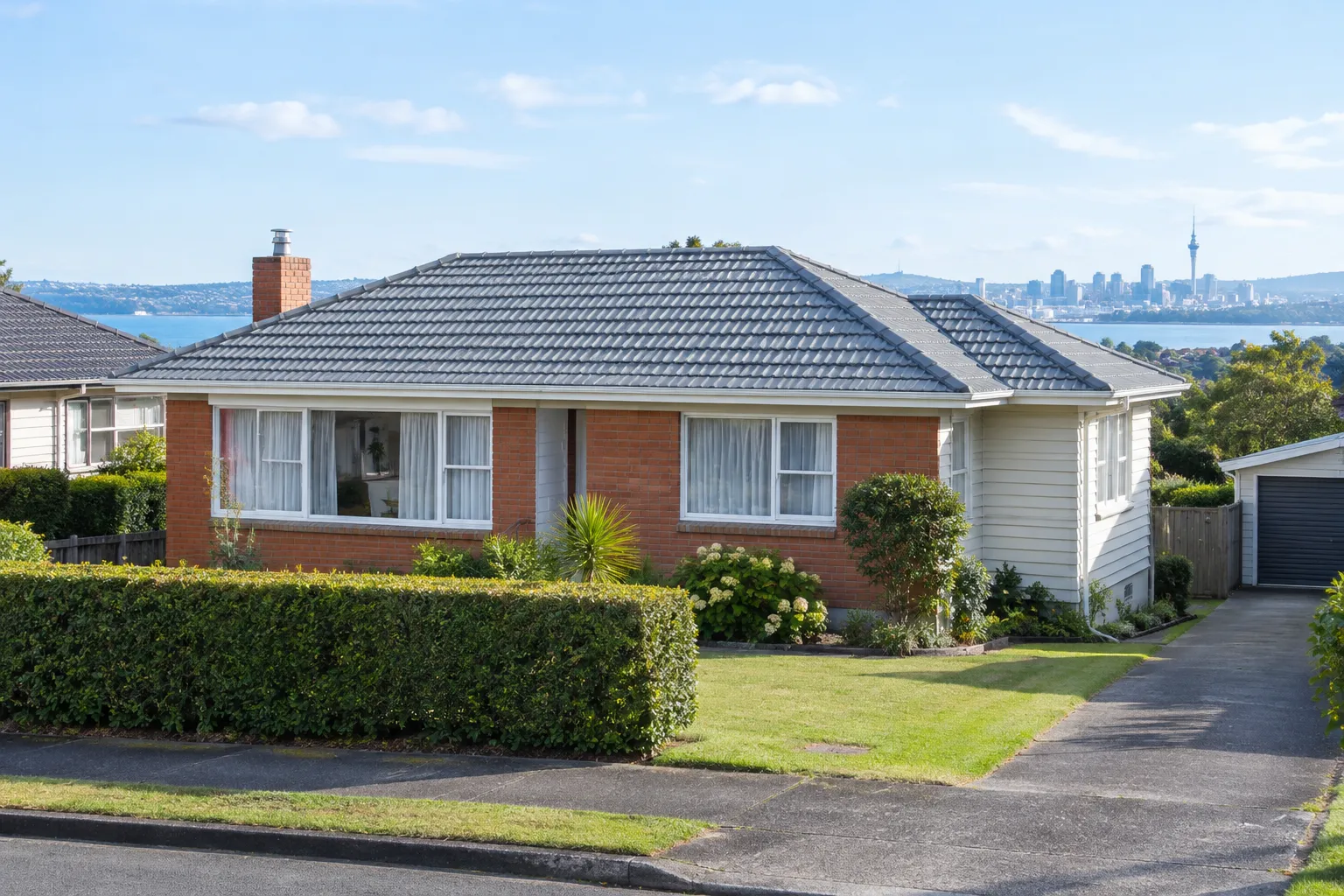
Yes, a concrete tile roof can be repainted, and in Auckland it is one of the most common roof painting jobs. The work is cleaning, repairs, sealing and painting: water blasting off moss, lichen and loose old coating, fixing cracked tiles and ridges, a sealer coat, then two topcoats of roof paint. This page is part of our guide to roof painting in Auckland. It covers which paint suits concrete and clay tiles, what a tile roof repaint costs, the limits of what paint can do, and what to ask a specialist. If you want to know whether you could do it yourself, read how to paint a tile roof.
What type of paint is used on concrete roof tiles?
Concrete roof tiles are painted with a sealer or primer made for cement surfaces, then two topcoats of an acrylic roof paint. Resene's system for concrete tiles is one coat of its solventborne Sureseal, followed by two coats of Summit Roof. The sealer binds the porous, weathered surface of the tile so the topcoats grip and last.
Concrete tiles are made from cement and sand, and over the years the surface erodes and becomes porous and dusty. That is why a tile roof needs a sealer, where a metal roof needs a metal primer. A typical tile roof repaint goes like this:
- Moss and lichen treatment, left to work before cleaning.
- Water blasting to remove dirt, growth and loose coating. Resene says water blasting is the best preparation for weathered cement roof surfaces.
- Repairs: cracked or broken tiles replaced, ridge caps re-bedded or re-pointed where the mortar has failed.
- Sealer coat on the whole roof, once the tiles are completely dry.
- Two topcoats of roof paint, usually by airless spray.
Moisture is the enemy of a good finish. Tiles hold water after washing, so a careful specialist waits until they are thoroughly dry before sealing.
Can you change the colour of roof tiles?
Yes. Painting is the usual way to change the colour of a concrete tile roof, and roof paints come in a wide range of colours. Lighter colours reflect more of the sun's heat, and Resene notes that white and off-white are the most reflective. Deep colours absorb more heat, so paint makers offer heat-reflective versions of darker shades.
A few things worth knowing before you choose:
- Colour charts show each colour's light reflectance value (LRV). A higher number reflects more light and heat.
- A dark roof shows fading sooner than a mid tone, so it may need repainting earlier.
- If you collect rainwater from the roof, tell the specialist. Some products and cleaning steps need extra rinsing before the water is safe to collect again.
Is painting a tile roof a good idea?
Painting a concrete tile roof is a good idea when the tiles are sound but the surface is faded, porous or covered in moss and lichen. It refreshes the look, slows the erosion of the tiles and makes the roof easier to keep clean. It is not a fix for leaks: Resene points out that roof paint lets moisture vapour pass, so a leak has to be repaired at its source.
When a repaint makes sense, and when it does not:
| Roof condition | Repaint? |
|---|---|
| Faded, mossy, but few cracked tiles | Yes, a repaint is a good fit |
| Some cracked tiles and loose ridges | Yes, after repairs |
| Leaks from broken underlay or the structure | Repairs first, then decide |
| Many crumbling or soft tiles | Get a re-roofing quote to compare |
For a roof that needs repairs as well as paint, ask about a full roof restoration.
What about clay tile roofs?
Clay tiles are less often painted than concrete. Glazed clay tiles have a fired finish that paint struggles to grip, and they are usually just cleaned and repaired. Unglazed terracotta can be painted after proper cleaning and a suitable primer, but many owners leave the natural colour. Ask the specialist which applies to your roof before you get a painting quote.
If you are not sure whether your roof is concrete or clay, the specialist can tell you during the site visit. Concrete tiles usually have a rougher, sandy surface, while glazed clay has a smooth, shiny finish.
How much does tile roof painting cost in Auckland?
A concrete tile roof repaint on a typical Auckland house usually costs $7,000 to $12,000. That is usually more than an iron roof, because tiles need more cleaning, repairs and a sealer coat. Per square metre, expect around $25 to $55. Your exact price comes from an on-site quote.
What drives the cost of a tile roof:
- The number of cracked tiles and the state of the ridges
- How much moss and lichen there is, and how long it needs treating
- Roof pitch, height and access
- Whether the old coating is flaking and needs more cleaning
The roof painting cost guide has the full price table and what to compare between quotes.
What are the downsides of painting a tile roof?
The main downsides are cost, upkeep and the limits of paint. A painted tile roof needs repainting again in time, so you are committing to future maintenance. Paint will not stop leaks from cracked tiles, failed ridges or damaged underlay. And if the surface is not cleaned and dried properly, the coating can peel, which costs more to fix later.
Other things to weigh up:
- Asbestos. Some older roofing materials in New Zealand contain asbestos. WorkSafe warns that high pressure water blasting must not be used on roofing that contains asbestos. If your house is older, ask the specialist how they will check.
- Stormwater. Auckland Council's guidance is that wash water from roof cleaning must not run into downpipes or stormwater drains. A good specialist plans for this.
- Warranty. Ask what warranty the specialist gives on their workmanship, and what the paint maker covers. Get both in writing with the quote.
Questions people ask
How long does roof paint last on concrete tiles?
A well-prepared tile roof repaint usually lasts around 10 to 15 years in Auckland. It can be shorter on roofs near the sea, in deep colours, or where the preparation was rushed. Keeping moss and lichen under control between repaints helps the coating last longer.
What cement is used to fix roof tiles?
Ridge caps on concrete tile roofs were traditionally bedded in a sand and cement mortar. Over time this mortar cracks and lets ridges move or leak. When a tile roof is repainted, the specialist often re-beds loose ridges and re-points them, and many now use a flexible pointing compound rather than plain mortar.
What is the best paint for roof tiles?
The best paint for roof tiles is a system made for concrete tiles: a cement sealer or primer, then two coats of an acrylic roof paint from a known maker. In New Zealand, Resene, Dulux and Wattyl all sell roof paint systems. The preparation and the sealer matter more to how long it lasts than the brand.
What is the longest lasting coating for a tile roof?
The longest lasting finish is usually a full system applied to a clean, dry, sealed roof: a sealer coat and two topcoats of a quality acrylic roof paint. Skipping the sealer or painting damp tiles shortens its life. Clear water repellents are an alternative if you want to keep the tile colour, but Resene says they need a maintenance coat every two to three years.
Should I fix cracked tiles before painting?
Yes. Cracked or broken tiles should be replaced, and loose ridges re-bedded, before any paint goes on. Paint will not hold a broken tile together or stop water getting in through a crack. Ask the specialist to include repairs in the quote, with a count of tiles they expect to replace.
Guides in this section
- How to paint a tile roof
Cleaning, drying and sealing concrete tiles, and the mistakes that make tile roof paint peel.
Sources used
- Resene, roof painting questions answered by its technical team
- Resene, Summit Roof product information
- WorkSafe New Zealand, check for asbestos before high pressure spraying on roofs
- Auckland Council, pressure washing and water blasting guidance
- Published prices of several Auckland roof painting businesses, checked November 2026
Last changed