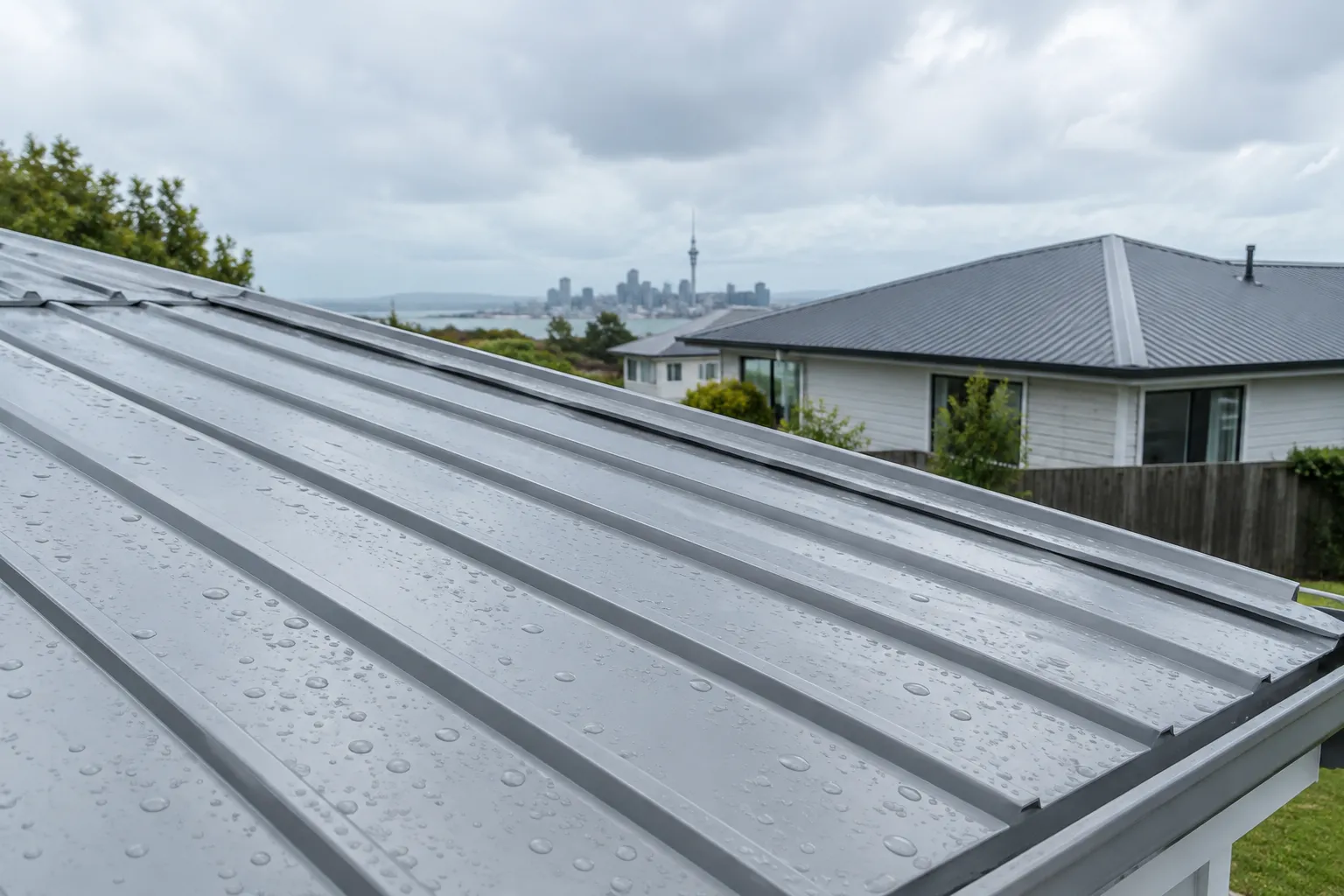
A roof coating is a paint or sealer system designed to protect the roof surface from UV rays, rain and the swing between hot summer temperatures and cool nights. On most Auckland houses, "roof coating" and "roof painting" mean the same job: cleaning, priming or sealing, then two topcoats. Thicker elastomeric and membrane coatings are a separate option, mostly for low-pitch and flat roofs. This page is part of our guide to roof painting in Auckland. It explains the main types of roof coatings, what they can and cannot do for a leaking roof, how they are applied, what they usually cost, and what to ask before you choose one.
What is a roof coating made of?
Most roof coatings sold in New Zealand are water-based acrylics, the same family as roof paint, designed to stay flexible as the roof heats and cools. Other coating systems use silicone, polyurethane or bitumen. Sealers and primers are thinner coats that bind a porous or chalky surface so the topcoats grip. A full coating system is the sealer or primer plus the topcoats.
The main types you will come across:
| Coating type | What it is | Where it is used |
|---|---|---|
| Acrylic roof paint | Flexible water-based topcoat | Iron, Colorsteel and concrete tile roofs |
| Sealer or primer | Thin first coat that binds the surface | Concrete tiles, bare or rusty metal |
| Elastomeric acrylic | Thick, rubbery acrylic film | Low-pitch metal and some flat roofs |
| Silicone | Water-resistant, UV-stable film | Mostly commercial flat roofs |
| Bitumen-based | Black, tar-like coating | Older membranes and some metal roofs |
| Liquid membrane | Thick waterproofing layer | Flat roofs, decks, gutters |
For a typical pitched house roof in Auckland, an acrylic roof paint system is the normal choice. The heavier coatings come into play when the roof is close to flat and water sits on it.
What is the best waterproofing for a leaking roof?
The best fix for a leaking roof is to find and repair the leak, not to coat over it. Leaks usually come from cracked tiles, rusted sheets, failed flashings or loose fixings. Standard roof paint will not stop them, because, as Resene notes, it lets moisture vapour pass through. On a flat or low-pitch roof, a liquid membrane coating can waterproof the surface once the damage is repaired.
A sensible order when a roof leaks:
- Find the source. Water can travel along framing before it drips, so the leak is often not right above the stain.
- Repair it: replace cracked tiles or rusted sheets, reseal flashings, replace failed fixings.
- Then coat: paint the roof to protect it, or use a membrane coating if it is a flat roof that needs one.
Be wary of any quote that says a coating alone will stop a leak on a pitched roof. Ask the specialist to name what is causing the leak and how they will fix it.
Can you spray on a roof coating?
Yes. Most roof coatings in Auckland are applied with an airless sprayer, which is faster than a roller on big roof areas and gets paint into the texture of concrete tiles. Rollers and brushes are still used for corrugated iron, cutting in around flashings, and on windy days. Spraying needs careful masking and a plan for overspray, especially near neighbours, cars and windows.
What a good application looks like:
- The roof is clean, dry and repaired before any coating goes on.
- The weather is suitable: no rain due before the coat dries, and no dew on the surface.
- Each coat goes on at the thickness the maker specifies, which is often why two coats are needed.
- Overspray is controlled, and paint wash water never goes into the stormwater drains, as Auckland Council requires.
What is the longest lasting roof coating?
The longest lasting roof coating is the system that suits your roof, applied to a properly prepared surface. On iron and tile roofs, a quality acrylic system often lasts around 10 to 15 years. Exposure matters: roofs near the sea, in deep colours or in full sun usually need recoating sooner.
What shortens a coating's life:
- Painting over dirt, moss, chalky paint or salt
- Painting damp tiles, or in cold, damp weather
- Skipping the primer or sealer on bare metal or porous tiles
- Applying the topcoats too thin
On dark roofs, heat-reflective versions of the paint keep the surface cooler. Resene says this lowers the risk of heat damage, though it does not remove it.
What are the disadvantages of roof coatings?
The main disadvantages are that a coating needs reapplying in time, it does not fix structural damage or leaks, and a poorly prepared coating can peel. Some heavy coatings also limit what can go on top later. On Colorsteel, Resene notes that most roof paints cannot be applied directly, so a coating not made for that finish can fail early.
Before you agree to a coating, ask:
- Which coating system, by product name, and how many coats?
- What preparation is included, and is rust or tile repair priced separately?
- Is it approved for your roof type?
- What warranty covers the workmanship, and what does the paint maker cover?
How much does a roof coating cost in Auckland?
On a typical pitched house roof, a coating costs the same as a roof repaint: expect around $25 to $55 per square metre in Auckland, or roughly $3,500 to $12,000 for the whole job depending on roof type. Flat roof membrane coatings are priced differently and depend heavily on repairs. Your exact price comes from an on-site quote.
See the roof painting cost guide for prices by roof type and what to compare between quotes.
Questions people ask
What paint should you use to repaint a metal roof?
Use an acrylic roof paint made for metal roofing, over a metal primer where the steel is bare or rusty. For Colorsteel, pick a topcoat the maker says bonds to that finish. Our guide to iron roof painting covers each type of metal roof and the system that suits it.
Is painting a metal roof a good idea?
Yes, while the steel is still sound. A coating protects the metal from rust and UV, refreshes the look of the house and costs far less than re-roofing. Once rust has gone through the sheets in many places, replacement is usually the better use of money.
Can I just paint over rust on metal?
No. Painting straight over rust traps it under the coating, and it keeps spreading. Loose rust should be scrubbed or wire-brushed back, then primed with a metal primer, with an extra primer coat on rusty spots. Resene notes that paint slows rust rather than stopping it, so new patches need treating as they appear.
Do roof sealers stop leaks?
Usually not on a pitched roof. A sealer binds the surface so paint grips, but it does not seal cracks, failed flashings or gaps at the laps. Leaks have to be repaired at the source. A thick membrane coating can waterproof a flat roof, but only after the underlying damage is fixed.
Sources used
- Resene, roof painting questions answered by its technical team
- Resene, paint system for COLORSTEEL and COLORBOND roofs
- Auckland Council, preventing paint pollution of waterways
- WorkSafe New Zealand, working on roofs
- Published prices of several Auckland roof painting businesses, checked November 2026
Last changed